- Client MACE
- Location Various
- Services Landscape Architecture, Biodiversity Net Gain, Ecology
- Sector Education
DfE TAS25
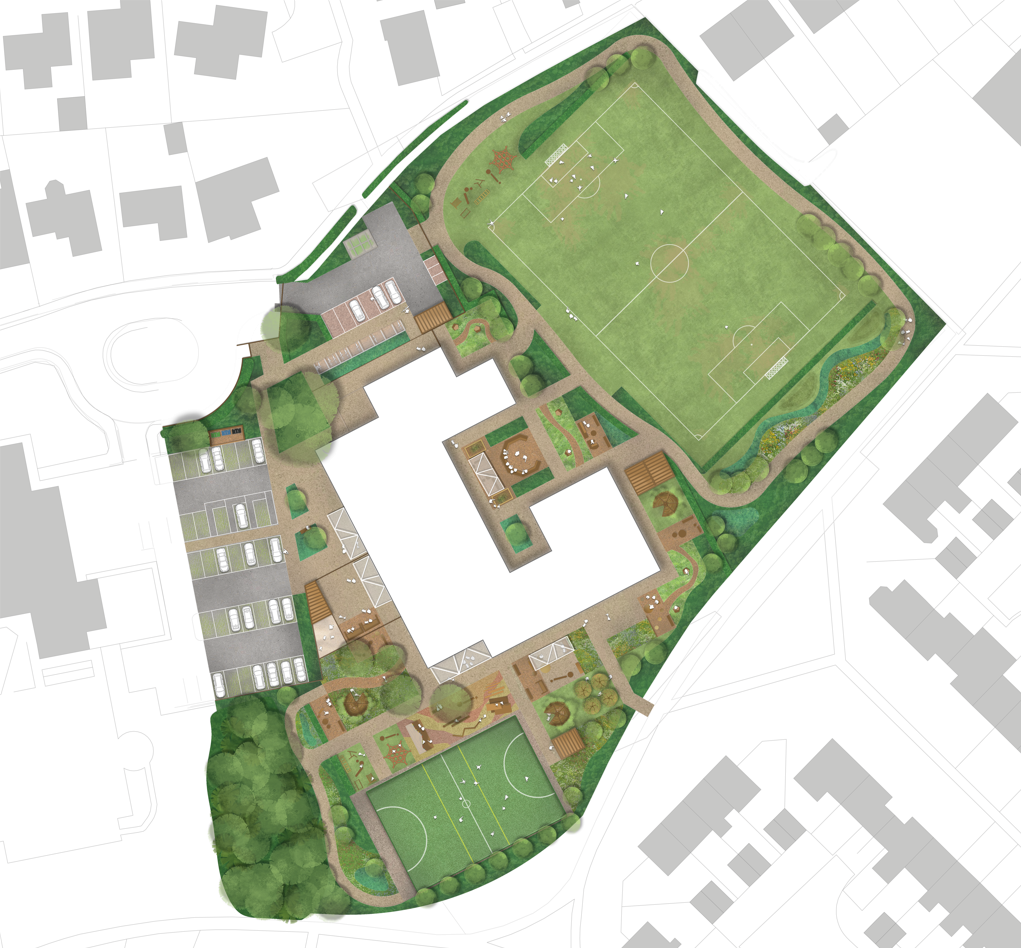
Urban Green were appointed to work collaboratively with MACE to support in a technical advisory role and produce concept landscape design options for a number of refurbished, redeveloped, or rebuilt schools across the country as part of the Technical Advisor Services Framework (TAS25) managed by the Department of Education (DfE).
The requirements included a considered and creative arrangement and placement of a series of designated spaces within the external landscape to support and enhance the school curriculum, all of which also needed to comply with the DfE’s Pattern Book. The Pattern Book is a spatial and architectural design guide prepared by the DfE to assist designers in providing a key set of principles and consistencies to ensure the functionality and educational objectives for both internal and external spaces are maximised.
Development of the proposals were worked through in utilising the Schedule of Places formula for each school, which calculates the variety, scale, and typology of components and spaces required within the school setting in order to comply with DfE standards, as well as being mindful of other influencing factors such as Sport England.
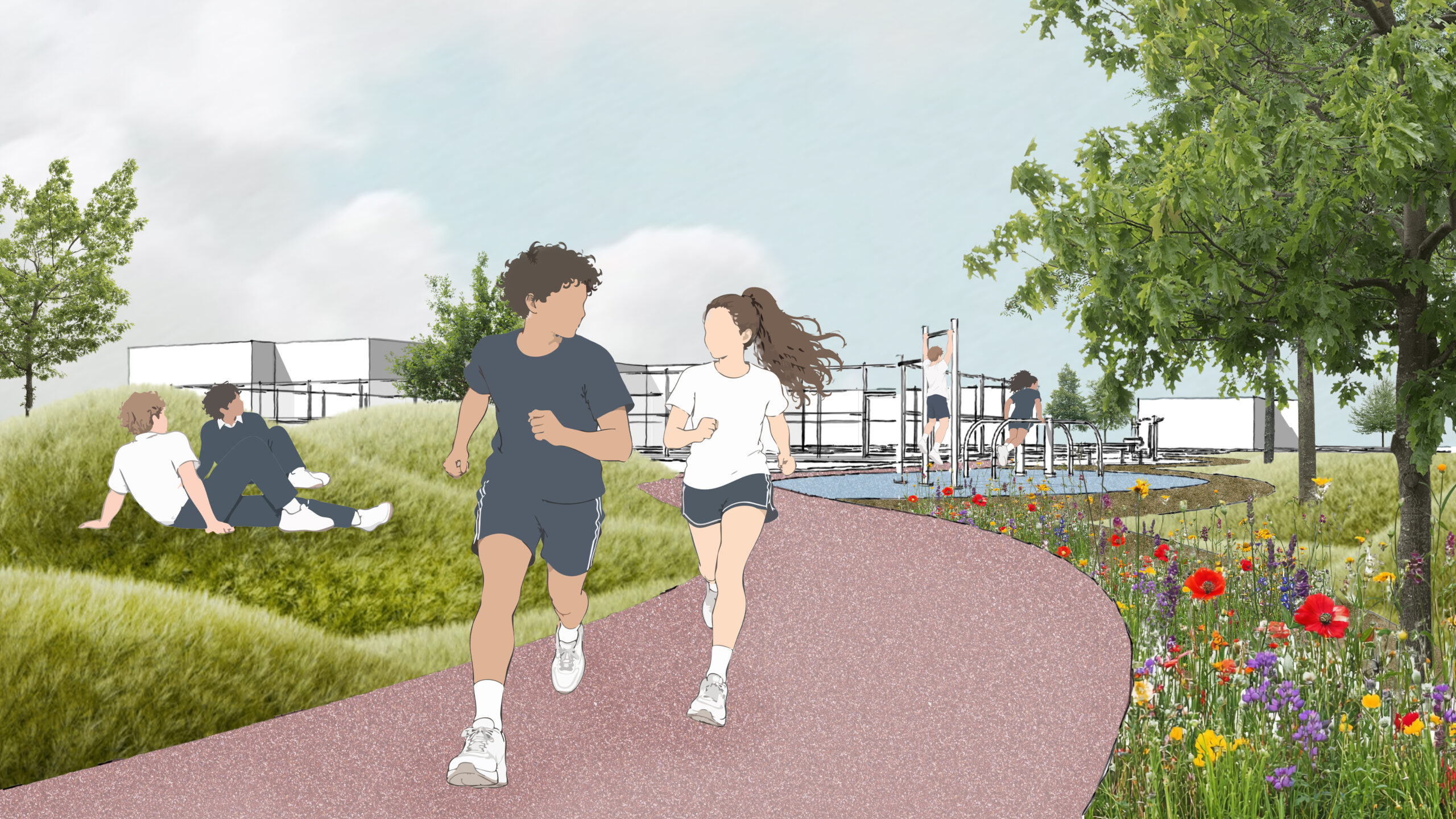
Each of the schools were consulted on their views and valuable input during the design process to gain vital insight to their aspirations and lessons learnt from the sites. Together, all requirements would work to rpovide a variety of spaces for different key stage age groups to maximise the formal and informal learning opportunitites, as well as ensuring a robust and considered design that would allow for fture growth, flexibility and adaptability.
External elements within the landscape that were designed included amphitheatres, MUGAs, social areas, sensory gardens, restorative spaces, communal play areas, rain gardens, forest school areas, biodiversity habitats and playing fields.
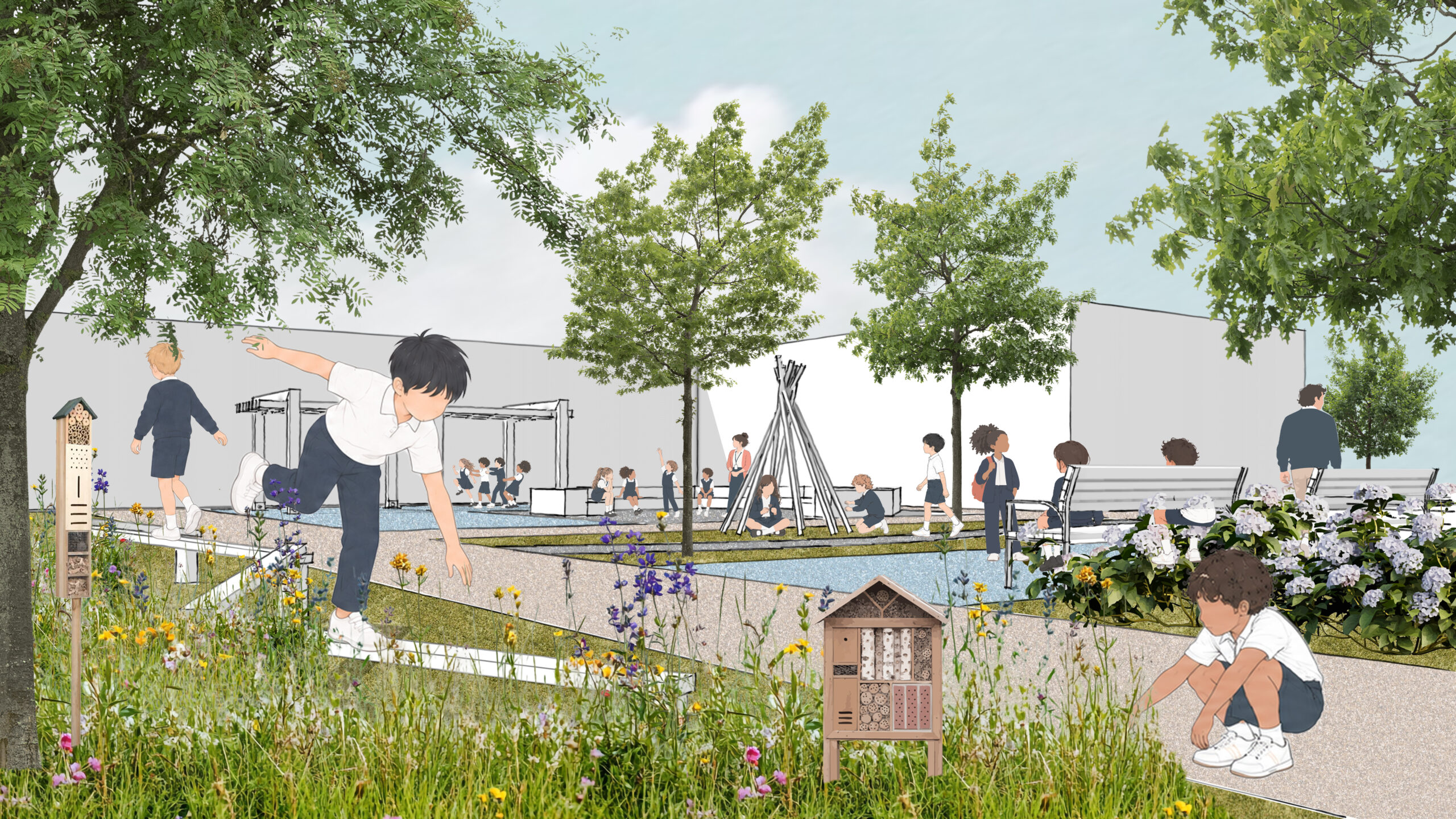
Working alongside our in-house Biodiversity Net Gain team and the external architects, we prepared a series of 3 concept options for each school site – all cognisant of the site context, constraints and opportunities. These were then presented to the DfE in form of a series of Touchpoint presentations, reviewing and critiquing the proposals to arrive at the preferred design proposal – In some cases this final option was a hybrid iteration of two of the design options. The final preferred option selected by the DfE would then be refined to a suitable level of information for planning and costing.
The resulting schemes from this process met the latest TAS25 requirements, the schools needs and BNG standards. Meaning the schemes had all been through a thorough examination and review, prior to planning and later on contractor tendering process.